We asked both a former national team rower and our very own certified trainer, Ergatta's
Chris Chang,
for the best advice on how to learn and improve rowing form. In the ultimate Beginner’s Guide to Rowing Form,
we break down the essentials of rowing technique into simple, easy to follow steps. Plus, you’ll find guided
exercises and video examples after each step to help you practice what you’ve learned on your own rowing machine.
This guide was developed with insights from certified trainer Chris Chang and experienced rowers to help beginners
learn proper rowing technique safely and effectively.
Rowing Form at a Glance: A proper rowing stroke follows the sequence legs, body, arms during the drive, and arms, body, legs during the recovery. Practicing drills like the Reverse Pick Drill helps beginners learn this sequence and develop efficient rowing technique.
Proper rowing form follows a simple sequence: legs, body, then arms during the drive, and arms, body, then legs
during the recovery. This sequencing allows rowers to generate maximum power while maintaining efficiency and reducing
injury risk. Mastering this pattern is the foundation of effective rowing technique for beginners and experienced
athletes alike.
Learning proper rowing machine technique improves efficiency, reduces injury risk, and helps beginners get the most
out of every indoor rowing workout.
If you're learning technique on an indoor rower, you can also
compare Ergatta rowers
to see how different models fit your training goals and home setup.
Rowing is an amazing low-impact, full-body workout that requires the use of your legs, back, core, arms and more.
Keeping track of all of these moving pieces can be daunting, but at Ergatta we encourage new rowers to focus on the
three main components of the rowing stroke: the legs, body, and arms.
These three components are grouped into two sequences, the Drive and the Recovery. First we’ll provide a deeper
understanding of the three components and the two sequences of the rowing stroke. Then we’ll explain exactly how to
practice your rowing form and sharpen your technique using a combination of Isolation and Integration Pick Drills.
Main Components of Rowing Form: Legs, Body, Arms
Let’s dive into the three components of rowing form: the legs, body, and arms.
Rowing is primarily a leg workout. Humans naturally have strong legs, so the push of the legs generates much more
force than the pull of the body and arms. Roughly 60% of rowing power comes from the leg drive, about 30% from the
body swing, and the final 10% from the arms. The arms extend the stroke length and help add speed to your “boat.”
Before covering the technique behind each component, start by getting set up on your rower. Have water nearby, sit
comfortably, strap your feet in, and grab the handle with both hands. Start with your knees bent, lean slightly
forward with a tall neutral spine, and extend your arms toward the front of the machine. This position is called
the Catch.
If you need a bit more setup guidance, watch the video below.
Now let’s look at the technique behind each component of the rowing stroke.
Legs
The first component of the rowing stroke is your legs. Starting from the catch position, push hard through your heels
to drive the seat backward until your knees are fully extended. Your body should remain leaning forward with a tall
neutral spine, and your arms should remain straight during the leg drive.
Tip: Fully extend your legs before beginning the next stage of the stroke to generate maximum power.
Try it now: Practice an isolation drill with legs only for 10 strokes, driving through your heels while keeping your arms and torso still.
Body
The second step of the stroke is the body swing. Once the legs are straight, hinge your torso from an 11 o’clock
position slightly forward to a 1 o’clock position slightly back by pivoting at the hips. Keep your core engaged
and maintain a straight line from hips to shoulders.
Tip: Think of your hips as the hinge of a door and your torso as the door itself.
Try it now: Practice 10 strokes focusing only on body swing while keeping your legs and arms straight.
Arms
The final phase of the drive is the arms. Pull the handle toward your chest, then extend your arms forward again
to begin recovery. Your legs should remain straight and your body slightly leaned back with a tall posture.
Tip: Pull the handle toward your sternum with elbows around a 45-degree angle.
Try it now: Practice 10 strokes focusing only on the arm pull and quick return.
Continue practicing the motions individually until each component feels more natural.
Two Rowing Sequences: The Drive & The Recovery
Every rowing stroke includes two sequences: the Drive and the Recovery. Both include the three components of legs,
body, and arms.
The Drive
The Drive follows the sequence of legs, body, and arms and is where power is generated.
Extend the legs by pushing through the heels until the knees are straight.
Swing the torso from 11 o’clock to 1 o’clock by hinging at the hips.
Pull the handle to the chest with the arms.
The Recovery
The Recovery reverses the sequence to return to the catch position: arms, body, then legs.
Extend the arms forward to a straight position.
Hinge the torso forward to return to the setup angle.
Bend the knees to slide back toward the catch.
Remember to finish each phase completely before moving to the next to maintain efficient rowing form.
Putting It All Together: The Complete Rowing Stroke
The goal of the rowing stroke is to accelerate the handle smoothly from start to finish without pausing between
components. Once you’re comfortable with isolation drills, start combining the movements using integration drills.
Think of the rowing stroke like a three-stage rocket. Each stage completes before the next begins. When the
sequence is correct, power transfers efficiently through the stroke.
As a beginner, one of the most important things to remember is that your body should not start swinging before the
legs have finished driving. In the same way, your arms should not begin pulling before the body has transferred force.
Completing each phase before moving to the next helps you row more efficiently and with better control.
How to Practice Rowing Form: The Reverse Pick Drill
The Reverse Pick Drill builds on isolation drills by gradually combining each movement into a full stroke. It’s one
of the best rowing drills for beginners because it reinforces correct sequencing in a simple, repeatable format.
Start with set 1, legs only, then in each consecutive set, add another element to practice the correct sequence.
If you get confused, don’t worry, watch the Reverse Pick Drill below to get a closer look.
Set 1: Legs only for 10 reps.
Set 2: Legs and body for 10 reps.
Set 3: Legs, body, and arms for 10 reps.
The Reverse Pick Drill is practiced by beginners and Olympians alike to reinforce proper rowing mechanics. Making it
part of your warm-up routine can help improve consistency, confidence, and long-term technique.
Key Takeaways
Proper rowing form follows the sequence legs, body, then arms during the drive.
The recovery reverses that order: arms, body, then legs.
The leg drive generates the majority of rowing power.
Isolation drills help beginners learn correct sequencing and technique.
The Reverse Pick Drill is one of the most effective rowing warm-ups for skill development.
Frequently Asked Questions About Rowing Form
What is proper rowing form?
Proper rowing form follows the sequence legs, body, then arms during the drive and arms, body, then legs during the
recovery. This helps maximize power, efficiency, and control.
What muscles does rowing work?
Rowing works the legs, glutes, core, back, shoulders, and arms, making it one of the most effective full-body workouts.
Is rowing a good workout for beginners?
Yes. Rowing is a great beginner workout because it is low-impact, scalable, and easy to improve with practice and proper technique.
How can beginners improve rowing technique?
Beginners can improve rowing technique by practicing drills like the Reverse Pick Drill, focusing on stroke sequence,
and building consistency over time.
What is the correct rowing stroke sequence?
The correct rowing stroke sequence is legs, body, arms on the drive and arms, body, legs on the recovery.
Why is leg drive important in rowing?
Leg drive is important because it generates most of the power in the rowing stroke and sets up the rest of the sequence.
Do you know someone who would love the Ergatta? Refer a friend and you'll get rewarded! You'll receive 3 free months of membership while your friend gets an extra $50 off their rower. Refer now >
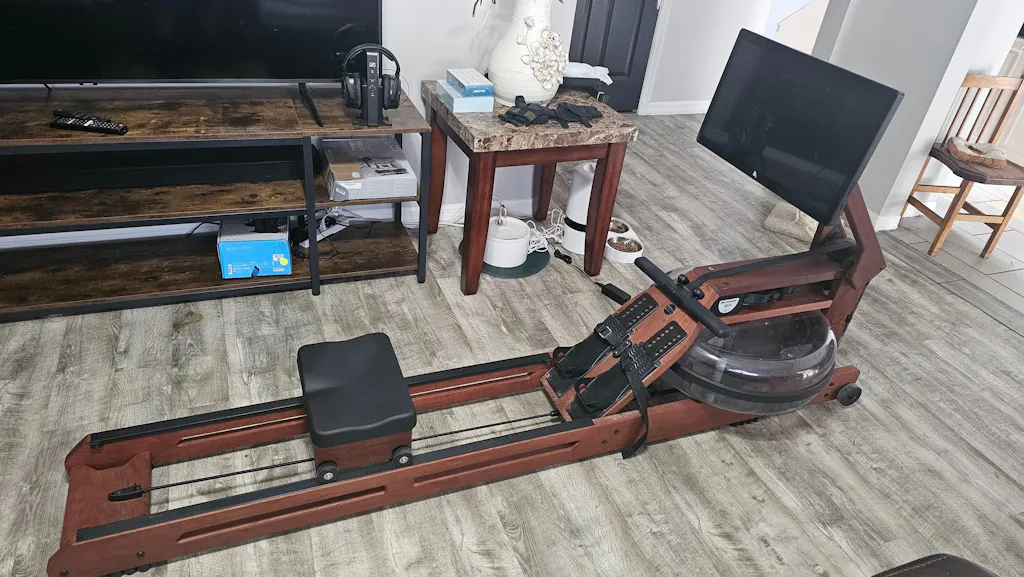
We did have a couple hiccups in the beginning when we first ordered the Luxe rower. First was that we paid for assembly and home delivery. The unit is normally assembled by the delivery partner prior to delivery. So at first I was told it couldn’t be delivered to the room I needed it to be put in due to the size of the rower and the path to get to the room, but ergatta and the delivery partner made it right. They disassembled the machine, delivered it and reassembled the machine in the room. Then, the screen started to give errors. Ergatta immediately sent us a new screen. Top notch customer service! Now past those initial issues, the rower is excellent! It of course looks great, but it also works incredibly well. The motion and resistance is incredible smooth. Use of the touch screen is very responsive and intuitive. I especially love all there is to do with it from games that you can play to competitions to just doing an open row where you pick a location and row around the area. I like seeing the stat tracking as well. Great machine! Highly recommend!
“At 71½, Ergatta made me look forward to working out—for the first time in my life.”
I came across Ergatta in February 2026 and decided to invest in one. By the end of the month, I was already rowing.
The first few days, I could barely complete the evaluation. By day four, I was up to 5–8 minutes. Just one month later, I’ve completed two challenges and rowed over 25,000 meters.
Tonight at 11 p.m., I completed a 1,100-meter race—and finished in 1st place.
That’s something I never expected to say.
What makes Ergatta different is the experience. The interactive, game-based format keeps your mind fully engaged while pushing you physically. You’re not just exercising—you’re competing, improving, and staying focused the entire time.
Ergatta has turned fitness into something I want to do, not something I have to do.
And that changes everything.
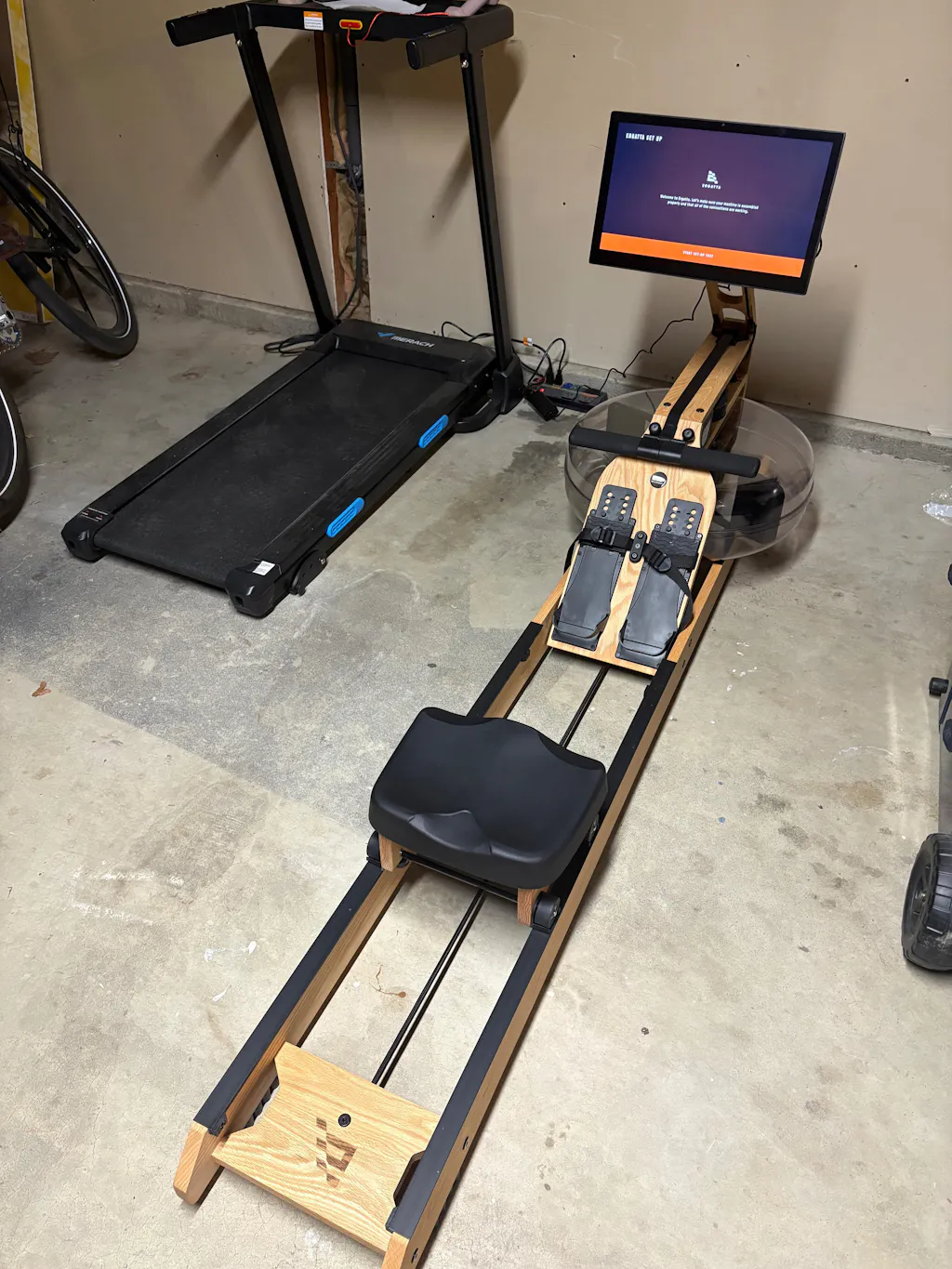
My rower was shipped quickly and arrived in two well packed boxes. The boxes are easy for one person to move and unpack.
In opening the boxes, I was impressed by the quality of the equipment and thoughtfulness of packing of each part. The assembly instructions were straight forward and all parts were easy to identify.
So far I’ve loved the machine and would definitely buy again.